





PD-L1-dependent CD28 costimulation
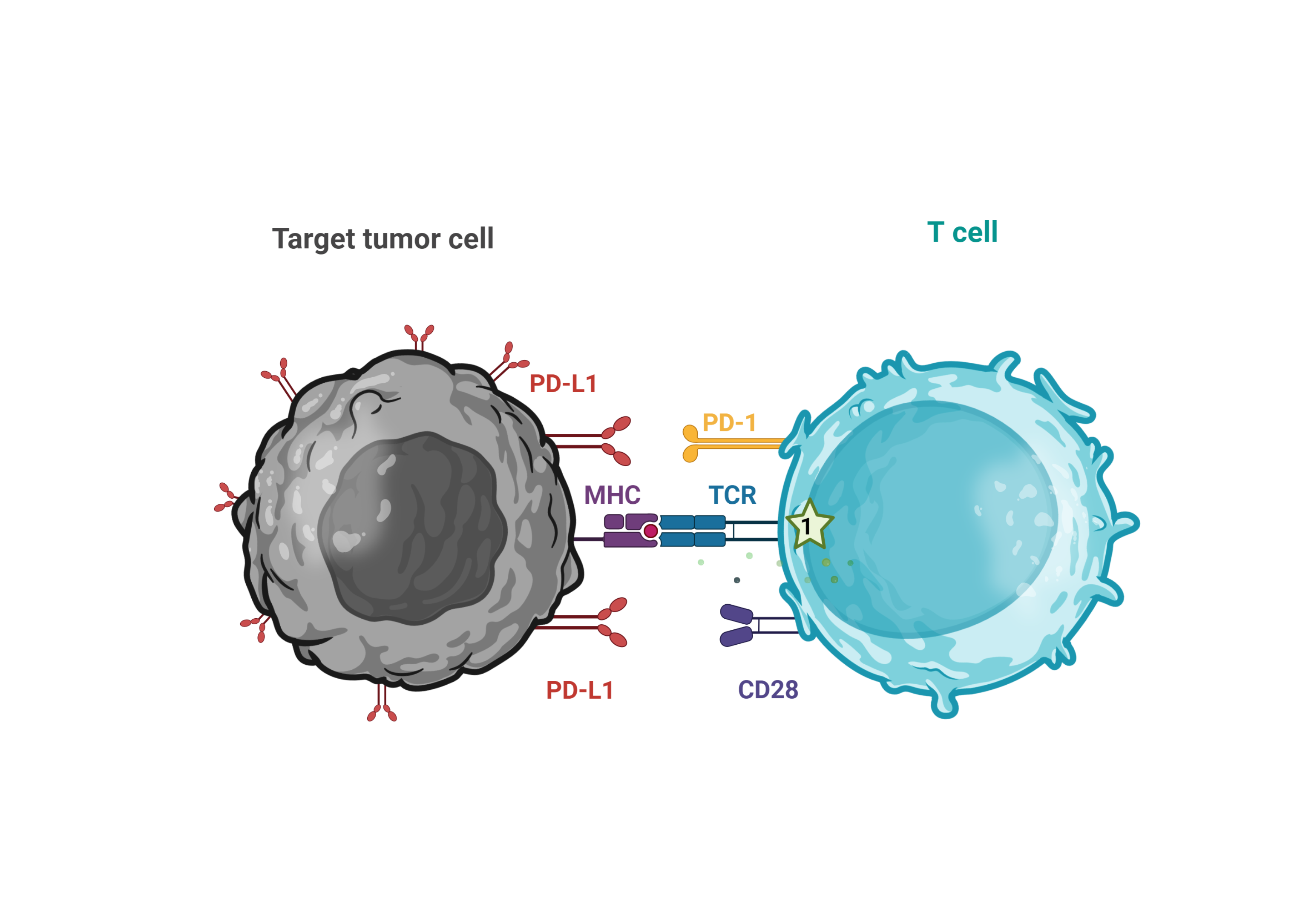
Step 1 – Tumor-specific T cells recognize their target via their T cell receptor (TCR)
T cells continuously scan a body’s cells in search of abnormalities, e.g., cancer cells. T cells use their surface receptor, T cell receptor (TCR), to bind peptides from degraded cell proteins complexed to major histocompatibility complex (MHC) molecules at the cell surface on cells. If the T cell’s TCR locates an MHC/peptide complex on a cancer cell, the binding triggers the so-called T cell activation “signal 1” (represented by a star in the figure below), which is the first step toward T cell activation.
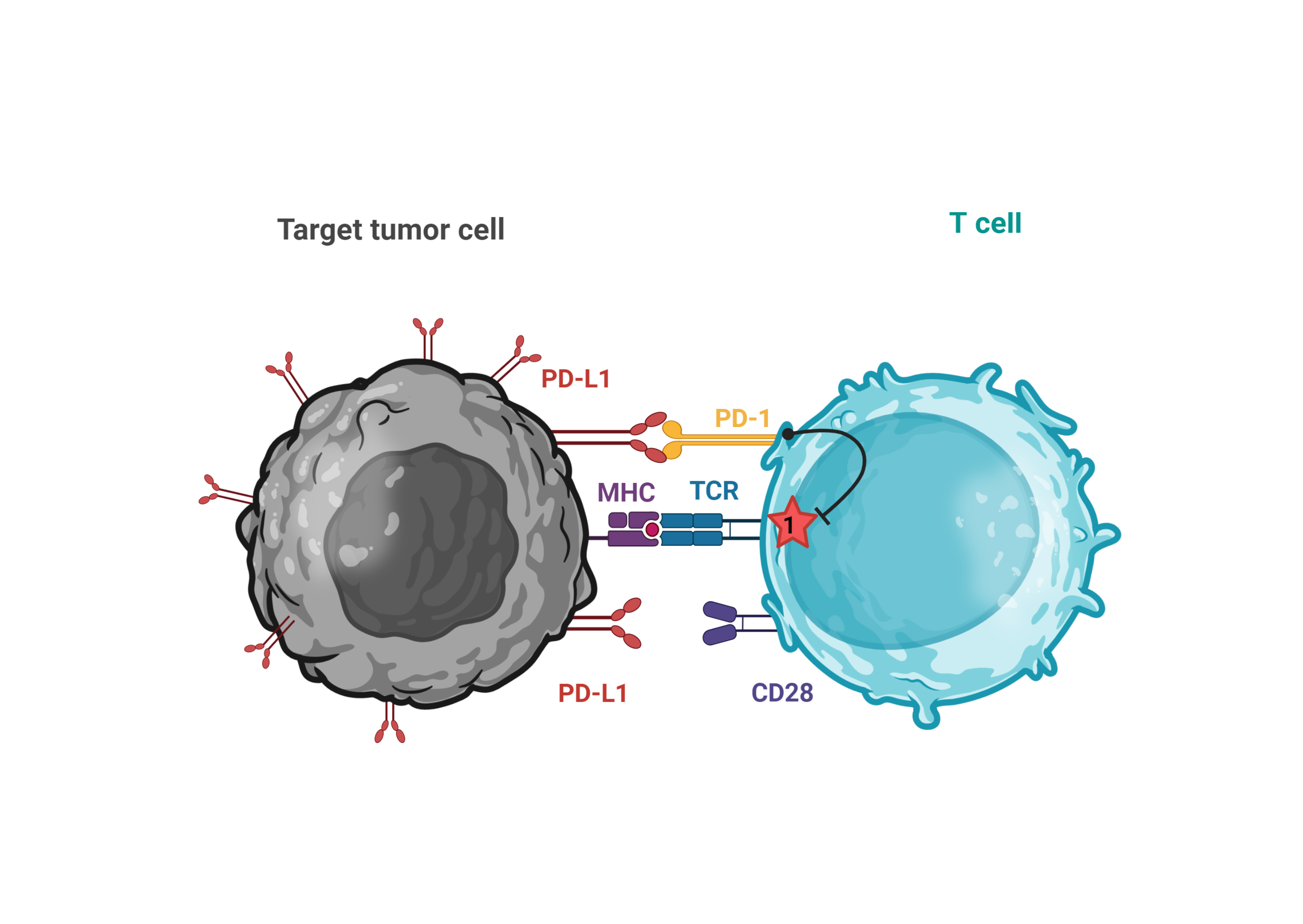
Step 2 – Tumor cells express PD-L1 to suppress T cell attack
Tumor cells can escape T cell surveillance by expressing PD-L1 at their surface. PD-L1 plays a major role in suppressing T cell responses by engaging the inhibitory checkpoint receptor PD-1 expressed on T cells. PD-1 exerts its activity by dampening T cell activation signals, including signal 1. Consequently, tumor-specific T cells are often unable to proficiently kill the cancer cells.
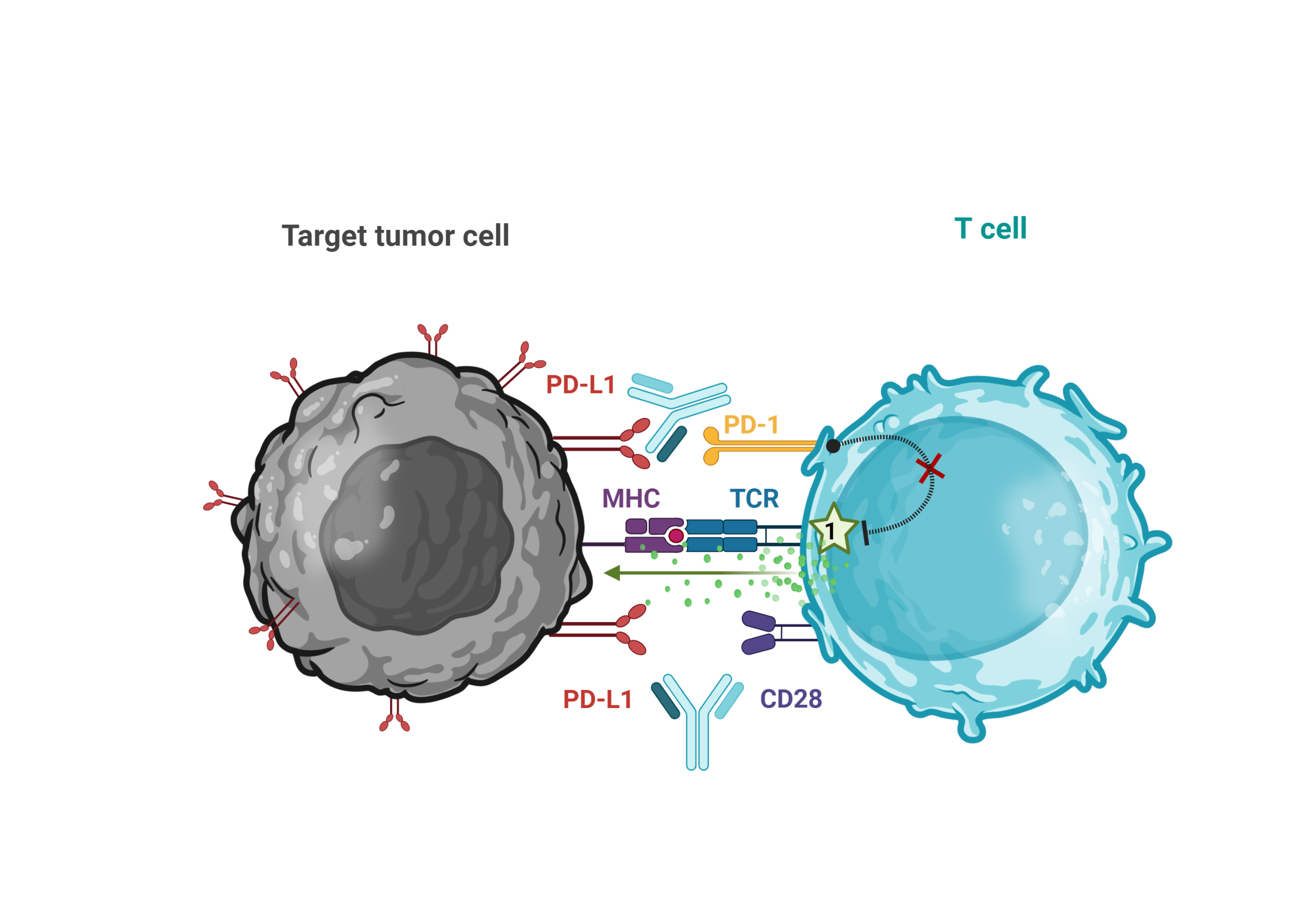
Step 3 – By blocking PD-L1, the inhibitory signal preventing T cell activation can be limited
Thanks to its blocking anti-PD-L1 arm, NI-3201 can prevent tumor-expressed PD-L1 from interacting with PD-1 expressed by T cells. In the absence of PD-1-derived inhibitory signal, T cells can be effectively activated, thereby restoring their anti-tumor activity.
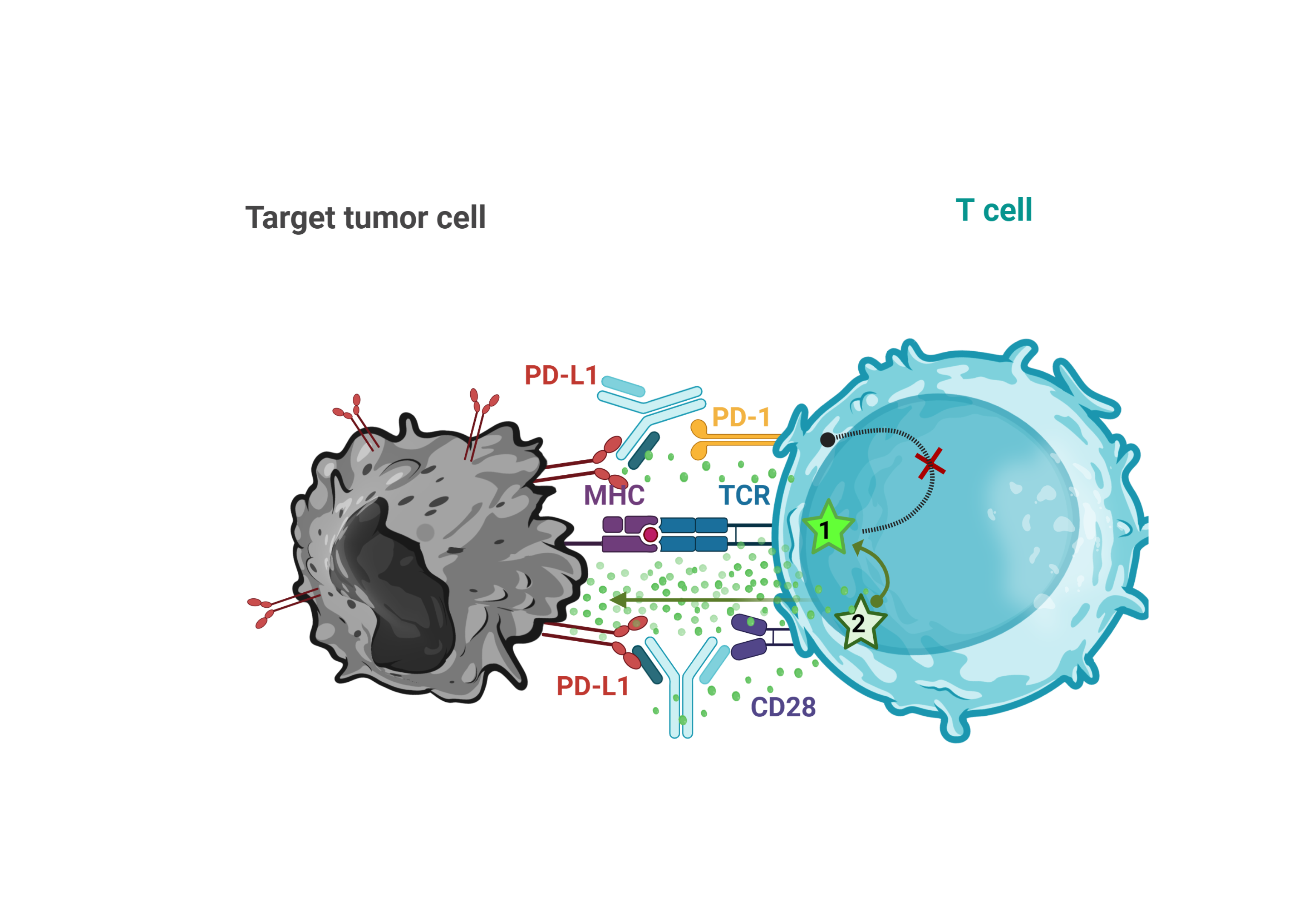
Step 4 – Delivery of T cell costimulation further enhance T cell activation and response, leading to cancer cell killing
However, complete T cell activation necessitates a secondary signal (signal 2), typically facilitated by the CD28 receptor. Activation of CD28 not only initiates full T cell activation but also promotes their survival. Upon interaction with PD-L1 on target cells, NI-3201 can induce CD28 agonism, thereby culminating in thorough T cell activation and effective elimination of targeted tumor cells.
Interested by this approach for your own projects? Partner with us
All drawings have been created by BIORENDER
